
Environmental protection
The Northern Water desalination plant and pipeline are designed to meet environmental and planning regulatory requirements.
Our comprehensive management and controls aim to:
- avoid potential environmental impacts where possible
- mitigate, manage or offset impacts where they cannot be avoided.
This planning ensures the unique environment of the Upper Spencer Gulf and Far North can continue to thrive.
For example, the design of the desalination plant intake and outfall pipelines will be tunnelled to avoid and protect the sand dunes, mangroves, seagrasses and coastal zones.
We're working with Traditional Owners, government agencies, recreational and fishing groups, tourism organisations, conservation groups and the community to help deliver the best solution for South Australia.
Planning and environmental assessments
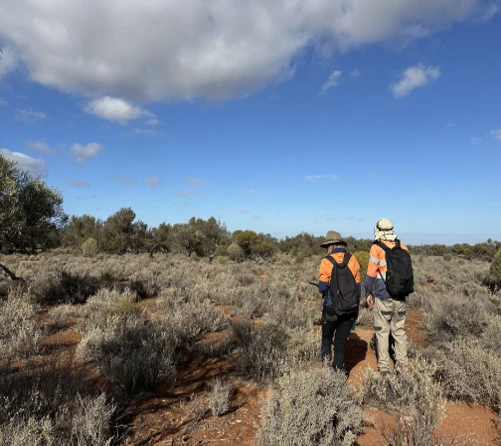
Image: Two ecologists in high-vis vests look towards the countryside.
The Northern Water Project Environmental Impact Statement (EIS) is now on public exhibition and available for review and submissions.
The EIS assesses the potential environmental, social and economic impacts and benefits of the Project and identifies measures to avoid, minimise and manage impacts. The EIS concluded that the Project can provide a climate-resilient water supply to support future mining and industrial development while avoiding, minimising and managing impacts through the Project's design, environmental management measures and ongoing monitoring.
The EIS has been informed by technical investigations and assessments undertaken by specialist consultants across a broad range of disciplines. Independent peer review of the marine ecology assessments, hydrodynamic modelling and outfall diffuser design was undertaken by experts from the University of Adelaide, CSIRO and the University of New South Wales to provide additional scrutiny of the methods, assumptions and conclusions used in the assessment.
To view the EIS and provide a submission visit: yoursay.sa.gov.au/northern-water-project-EIS
Consultation to inform Project outcomes
To support informed decision making, we meet regularly with our Stakeholder Reference Group, which includes representatives from the community, commercial and recreational fishing industry groups, government agencies, landscape boards, local government and conservation groups.
We are also working closely with the Traditional Owners - the Barngarla and Kokatha Peoples - to incorporate their knowledge and understanding of Country into the Project. Insights will continue to be gathered throughout each Project phase to ensure diverse perspectives inform project outcomes.